he U23 Asian Cup has never been just a youth tournament. It is a pressure cooker where raw potential collides with the cold demands of competitive football. Watching Japan's U23 side dismantle opponents with mechanical precision in the 2024 edition, one thing became clear: this competition is less about development and more about survival. Players arrive as prospects;they leave either hardened or exposed.
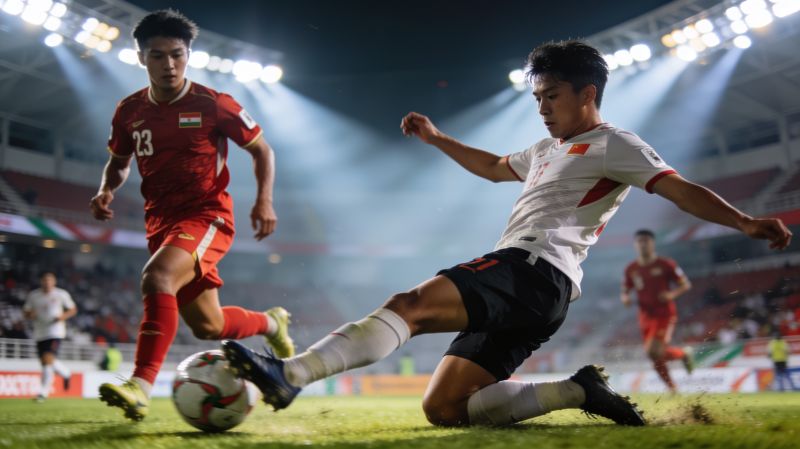
Consider the case of South Korea's campaign. Their group stage exit wasn't a failure of talent—several players already feature in top-tier K-League squads—but a failure of adaptation. The U23 Asian Cup demands a different kind of intelligence. Clubs teach players to fit systems;this tournament forces them to solve problems on the fly. I watched a Korean midfielder repeatedly check his shoulder, only to be blindsided by a Japanese press that had clearly studied his habits. That's the level of detail here. Coaches dissect footage like forensic analysts, and a single predictable touch can cost a match.What makes the U23 Asian Cup so compelling is its unpredictable rhythm. Unlike senior competitions, where experience often dictates tempo, youth matches swing wildly. A team can dominate for twenty minutes。then concede twice in five. Australia's quarter-final collapse against Saudi Arabia was a masterclass in momentum loss—two defensive lapses, both from set pieces, and suddenly a well-drilled side looked lost. That volatility isn't a flaw;it's the tournament's signature. It exposes mental fragility as much as technical gaps.Scouting networks have caught on. Premier League clubs now send dedicated analysts to the U23 Asian Cup, not just for standout individuals but for patterns of decision-making under stress. A striker who scores five goals against weak opposition means little;a defender who organizes a backline through extra time tells a richer story. I spoke with a European scout in Doha who admitted he ignores highlight reels entirely. He watches warm-ups and bench reactions. "You learn more from how a player responds to being substituted," he said. That's the U23 Asian Cup's hidden curriculum.The tournament's real value。
though, lies in its brutality. There's no safety net. One bad half can end a campaign, and with Olympic qualification often on the line, the stakes distort normal youth development. Coaches abandon rotation, lean on their best eleven, and park the bus when needed. It's ugly at times. But it's honest. The U23 Asian Cup doesn't pretend to be a finishing school. It's a proving ground, and the players who emerge from it—whether celebrated or criticized—carry lessons that no training session can replicate.